 Berlin to Warsaw Border Checks (2026): Passports, Trains, Buses and Cars
Updated October 7, 2026
Germany and Poland both run temporary checks at their shared border, so a trip between Berlin and Warsaw can include a document check in either direction. The current extensions run to March 15, 2027 on the German side and March 30, 2027 on the Polish side.
This guide covers the current status, which documents to carry, what to expect on the Berlin-Warszawa-Express, on buses and in a car, typical delays, and how to keep mobile data working on both sides.

6 min read
The short version
- Both countries check traffic entering their territory: Germany since October 16, 2023, Poland since July 7, 2025. The current periods end on March 15, 2027 (Germany) and March 30, 2027 (Poland), and both have been extended repeatedly.
- Carry a physical passport or national ID card for every traveler, children included. Poland's Border Guard does not accept the mDowód digital ID at the border.
- On the Berlin-Warszawa-Express, Polish checks are selective and done on board. Heading into Germany, Federal Police check trains at Frankfurt (Oder), which can add 5 to 15 minutes.
- Both countries are in the EU, so EU SIMs roam at home rates. Visitors from the UK, US and elsewhere usually pay roaming, and one Europe eSIM covers Germany and Poland.
Current status: checks on both sides
Germany has checked its land border with Poland since October 16, 2023, and all of its land borders since September 16, 2024. Its current notification to the European Commission runs from September 16, 2026 to March 15, 2027.
Poland reintroduced checks on its borders with Germany and Lithuania on July 7, 2025, citing migration pressure. The latest extension runs from October 2, 2026 to March 30, 2027.
Both countries are in Schengen, so these are temporary internal border controls that have to be renewed and notified to the European Commission. Each one has been extended so far, so check the latest status before any trip after March 2027.
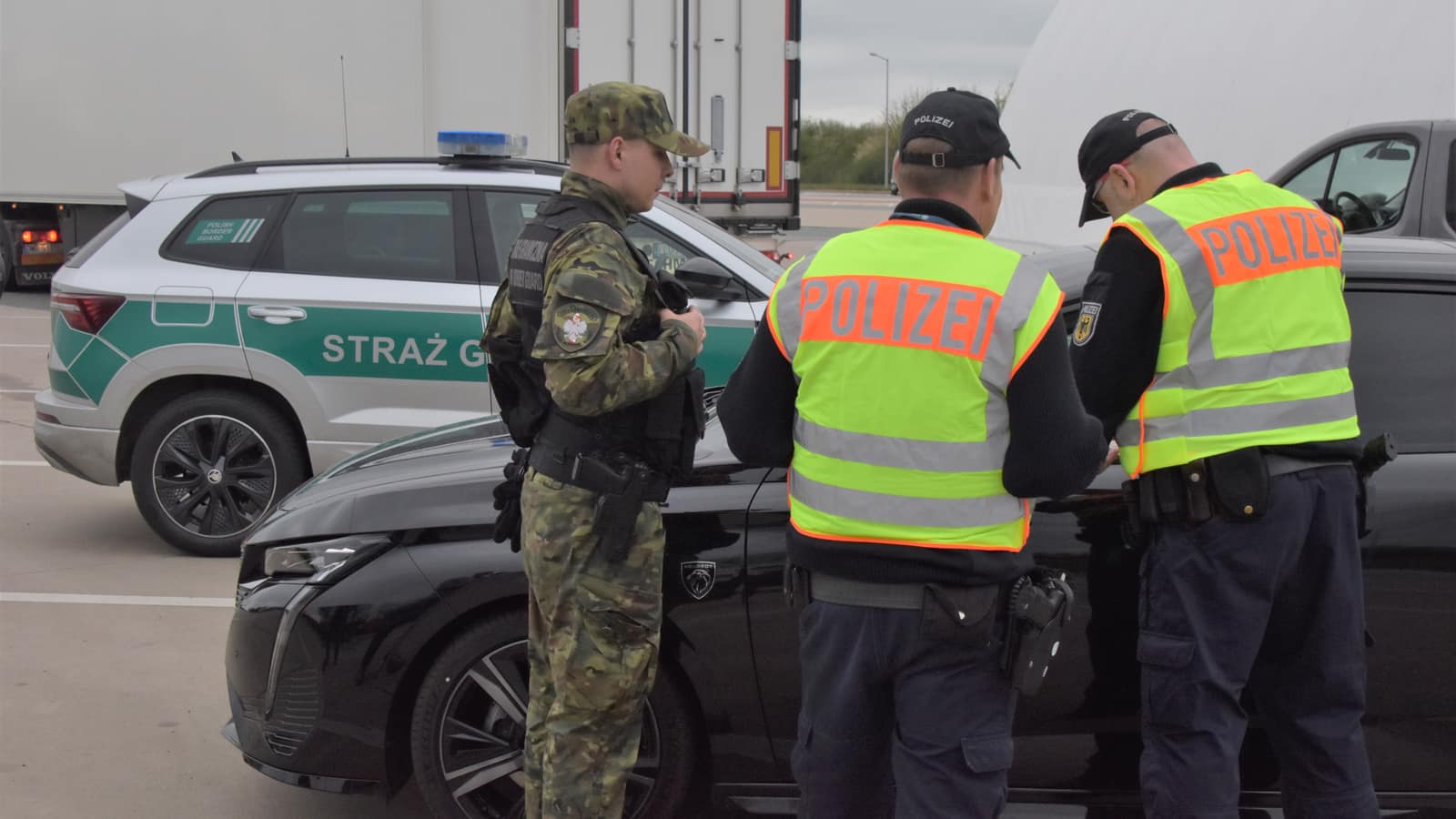
Each country checks traffic entering its own territory: going from Berlin to Warsaw you may meet the Polish Border Guard, going from Warsaw to Berlin the German Federal Police. Polish checks are selective and risk-based, so many travelers cross without being stopped.
Which documents to carry
Everyone crossing, children included, needs a document that proves identity and citizenship. EU, EEA and Swiss citizens can use a valid national ID card or a passport.
Everyone else needs a passport, plus a visa or residence permit if their nationality requires one for Schengen. Foreign nationals without documents that allow entry can be turned back at the border.
Poland's Border Guard says the mDowód digital ID is not valid for crossing the border, and Polish authorities recommend carrying a physical document. Keep it on you, not in checked luggage or the car boot.
On the Berlin-Warszawa-Express
The Berlin-Warszawa-Express, run jointly by DB and PKP Intercity, links Berlin Hauptbahnhof and Warsaw via Frankfurt (Oder), Rzepin and Poznań in a little over five hours. It crosses the border on the bridge over the Oder just east of Frankfurt (Oder).
Eastbound into Poland, Border Guard officers can board and check documents selectively, in the carriages or on the platform. Westbound into Germany, Federal Police check trains during the stop at Frankfurt (Oder).
Delays to plan for
Deutsche Bahn warns that border checks at Frankfurt (Oder) can delay trains by around 5 to 15 minutes. Keep your passport or ID card ready when the train heads into Germany, stay on board during the check, and leave slack before a tight connection in Berlin.
By bus or car
Buses and cars mostly cross on the A2/A12 motorway at Świecko and Frankfurt (Oder), or on smaller road bridges along the Oder and Neisse. Poland only allows entry from Germany through designated crossing points listed in its regulation, around 50 along the German border.
When a coach is stopped, officers may check every passenger's documents, which takes a while on a full bus. Drivers face selective checks too, and on the Polish side some approaches to the crossings are narrowed to one lane.
Weekends are slower
Polish authorities advise expecting delays and allowing extra time, especially at weekends. Check traffic before you set off and keep documents within reach.
Roaming and eSIM on both sides
Germany and Poland are both in the EU, so a SIM from any EU country works on both sides at home rates under roam-like-at-home. You can cross the Oder without thinking about your phone bill.
Travelers from the UK, US, Canada, Australia and the rest of the world are outside that rule and usually pay their home carrier's roaming rates in both countries. A trip from Berlin to Warsaw means two countries of roaming.
A Europe eSIM installed before you travel covers Germany and Poland on one plan, so maps, tickets and messages keep working when the train crosses the border. Your home SIM stays active for calls and bank codes.
Frequently asked questions
Are there border checks between Germany and Poland?
Yes. Germany checks traffic entering from Poland, currently until March 15, 2027, and Poland checks traffic entering from Germany, currently until March 30, 2027. Both have extended their controls several times.
Do I need a passport to travel from Berlin to Warsaw?
EU, EEA and Swiss citizens can travel with a valid national ID card instead of a passport. Everyone else needs a passport, plus a visa or residence permit if their nationality requires one.
Is a digital ID enough at the Polish border?
No. Poland's Border Guard does not accept the mDowód digital ID for border crossings. Carry a physical ID card or passport.
Is there a border control on the Berlin to Warsaw train?
There can be. Polish officers check selectively on board eastbound trains, and German Federal Police check westbound trains at Frankfurt (Oder) station.
How much do the border checks delay the train?
Deutsche Bahn says the checks at Frankfurt (Oder) can delay trains by around 5 to 15 minutes. Leave a buffer if you have a connection to catch in Berlin.
Will I be stopped driving from Germany to Poland?
Possibly. Poland runs selective checks at designated crossing points, and Germany checks traffic coming the other way. Expect queues at busy times, especially at weekends.
Does my phone plan work in both Germany and Poland?
EU SIMs work in both at home rates. If your SIM is from outside the EU, install a Europe eSIM before the trip to avoid roaming charges in both countries.
Crossing between Berlin and Warsaw? Stay online on both sides
Tickets, maps and messages should keep working when the train crosses the Oder. Install an eSIMPal eSIM that covers Germany and Poland before you travel and skip roaming charges in both countries.
Last updated October 7, 2026. Based on the European Commission's list of notified internal border control reintroductions, announcements by Germany's Federal Ministry of the Interior and Federal Police, Poland's Ministry of the Interior and Administration (MSWiA) and Border Guard (Straż Graniczna), the Lubuskie voivodeship office's traveler guidance, and Deutsche Bahn's border control notice. Controls are renewed periodically, so check the latest status before you travel.