 Warsaw Chopin Airport in 2026: Security Works, Queues, and How Early to Arrive
Updated October 5, 2026
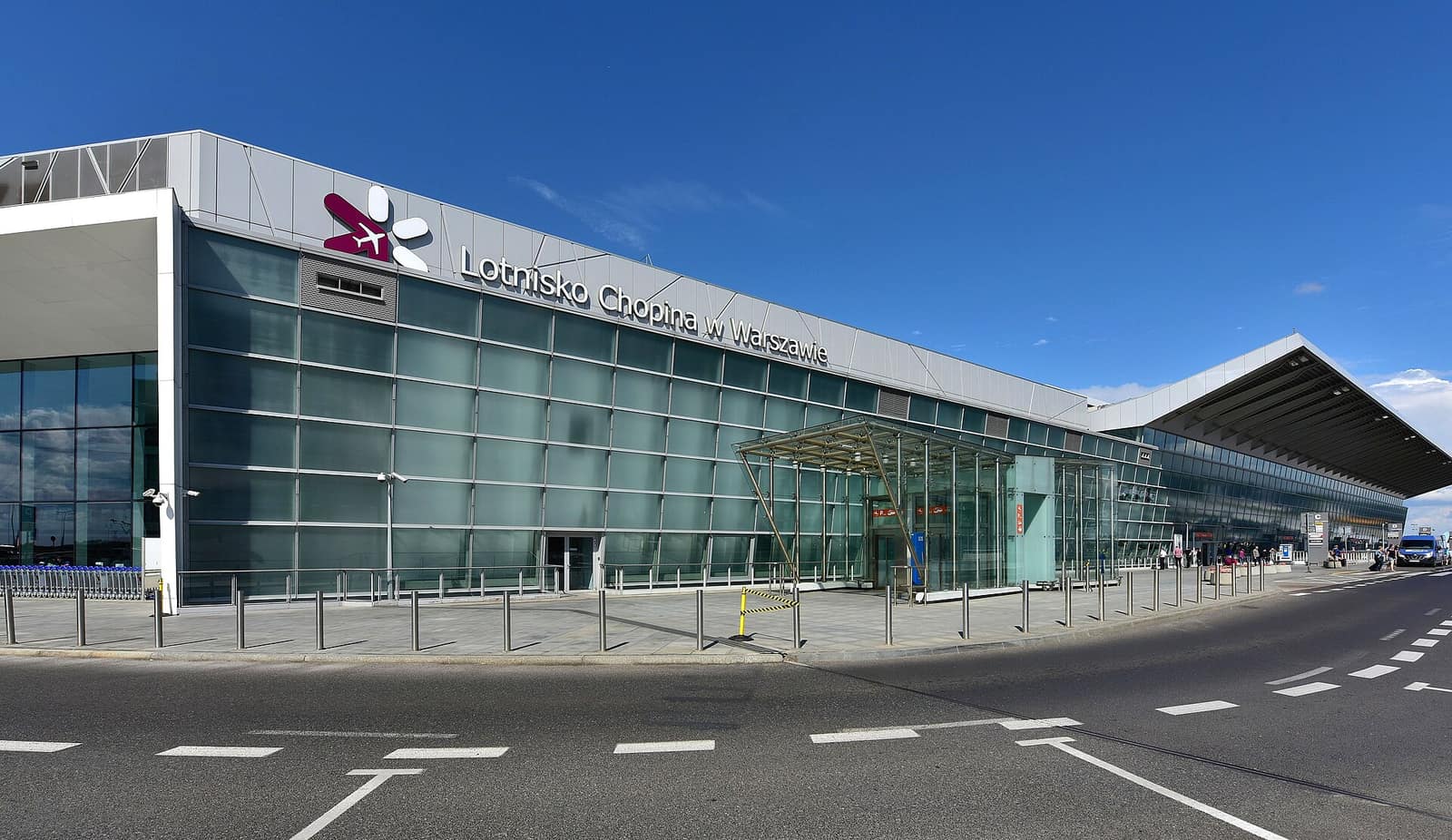
Warsaw Chopin Airport is modernizing its security control areas in stages until December 2026, swapping in latest-generation scanners lane by lane. Flights run normally, but the airport itself asks passengers to arrive earlier while the works last.
This guide covers what the security works mean for your queue, how early to arrive for Schengen and long-haul flights, the cheapest ways into the city with current prices, and how to skip the SIM kiosk queue in arrivals.

7 min read
The short version
- The security control areas are being rebuilt in stages until December 2026. All flights operate, but individual lanes and Fast Track areas close in turns, so queues can be longer than usual.
- The airport recommends arriving at least 2 hours before Schengen flights and 3 hours before long-haul flights, and going straight to security after check-in while the works last.
- SKM trains and bus 175 link the airport with the center in about 30 minutes on a 4.40 PLN 75-minute ticket. A taxi from the official ranks costs around 50 PLN to the center.
- SIM kiosks in arrivals require passport registration and keep limited hours. An eSIM installed before you fly puts you online the moment the plane lands.
The security works: what changes until December 2026
Chopin Airport began modernizing its security control areas on May 6, 2026. The works run in stages until December 2026 so the airport can keep handling passengers throughout.
The point of the project is latest-generation CT scanners at security. Once they are in service, electronics can stay in your bag and the airport plans to allow far more liquids in hand luggage.
Until the airport announces the change, the old rules still apply: liquids in containers up to 100 ml, packed in a single transparent 1-liter bag. While the works last, expect single lanes to be closed and queues to shift between checkpoints.
New scanners, lane by lane
The airport is installing new-generation scanners and automatic tray return systems one security lane at a time. Each lane under conversion is out of service, and that is where the extra queueing comes from.
Fast Track partly closed
Individual Fast Track areas are temporarily taken out of service during the works. The airport says at least one Fast Track area stays open at all times, so priority security keeps running.
Liquids: the 100 ml rule still applies
The new scanners are built for larger liquid allowances, and the airport has announced plans to raise the limit once the rollout is complete. Until that is official, pack liquids the usual way.
How early to arrive in 2026
The airport's official guidance is at least 2 hours before a Schengen flight and 3 hours before a long-haul flight. During the security works it also asks passengers to head to security control immediately after check-in and bag drop.
Check-in desks close 30 minutes before short-haul and European departures, 1 hour before long-haul flights, and typically 45 minutes before charters. Online check-in plus hand luggage saves the most time while the works last.
If you fly at peak hours, early in the morning or around holidays, add 30 to 60 minutes on top of the official recommendation. Lanes close in turns, and one closed checkpoint can slow a whole wave of departures.
The 218 million euro expansion: what comes after 2026
The security works are the small project. In 2026 the airport's operator, Polish Airports, also cleared the way for a terminal expansion worth around 218 million euros, planned for completion in 2029.
The plan grows the terminal by about 15 percent, with the focus on the non-Schengen zone, and lifts capacity from around 24 million passengers a year to more than 30 million. The construction contract is scheduled for 2027, so the heavy building starts after the current security works end.
Chopin stays Warsaw's main airport until the planned new central airport (CPK) opens in the 2030s, and none of this involves closing it. On a 2026 trip, the security modernization is the only project you will notice.
Getting to the city: train, bus 175, taxi
The airport sits about 10 km from the center, and the railway station is right under the terminal. A 75-minute public transport ticket for 4.40 PLN covers trains and buses alike, including any onward transfer within zone 1.
SKM trains: from under the terminal
SKM lines S2 and S3 run from the airport station to the central stations, including Warszawa Śródmieście and Warszawa Zachodnia, in roughly 20 to 30 minutes. A regular 75-minute zone 1 ticket is enough; Koleje Mazowieckie trains also call here on the Modlin route.
Bus 175: straight through the center
Bus 175 runs daily from outside the terminal through the center to Piłsudski Square, passing close to the main sights and hotels. The same 4.40 PLN 75-minute ticket applies, and at night the N32 bus covers the route to the center.
Taxi, Bolt and Uber: about 50 PLN
The airport puts the fare to the city center at around 50 PLN from the official taxi ranks outside arrivals. Bolt and Uber both pick up at the airport and show the price upfront; ignore anyone offering rides inside the terminal.
Once the daytime network winds down, the N32 night bus and ride-hailing are the realistic options. Ordering a Bolt or Uber needs mobile data the moment you land, which is worth sorting out before you fly.
Airport SIM kiosks vs eSIM
Orange, Plus and T-Mobile run kiosks in the arrivals area, and the Relay store near arrivals stocks prepaid starter packs. A tourist SIM with a usable data bundle typically costs around 20 to 40 PLN.
Polish law requires every prepaid SIM to be registered against a passport, so buying one means paperwork and a queue right after your flight. Kiosk hours are limited too; land late in the evening and the counters may already be closed.
A Poland eSIM installed before you fly removes the whole step: your phone connects to a Polish network the moment the plane lands, and your home SIM stays in place for calls and banking codes. One eSIMPal Europe plan covers around 39 European countries including Poland, so the same data keeps working if you continue to Kraków, Berlin or Prague.
Frequently asked questions
Is Warsaw Chopin Airport under construction in 2026?
Yes, in a limited way. The security control areas are being modernized in stages until December 2026, with new scanners installed lane by lane. Flights operate normally, and the larger terminal expansion is planned for 2027 to 2029.
How early should I arrive at Warsaw Chopin Airport?
The airport recommends at least 2 hours before a Schengen flight and 3 hours before a long-haul flight. During the security works it asks passengers to go through security immediately after check-in, and an extra 30 to 60 minutes at peak times is a sensible buffer.
Can I take more than 100 ml of liquids through security at Warsaw Airport?
No. The new scanners are designed for larger liquid allowances and the airport has announced plans in that direction, but until it confirms the change the standard rule applies: containers up to 100 ml in a single transparent 1-liter bag.
How do I get from Chopin Airport to the city center by train?
SKM lines S2 and S3 leave from the station under the terminal and reach the central stations in roughly 20 to 30 minutes. A 75-minute zone 1 ticket for 4.40 PLN covers the ride and any onward transfer.
What is the cheapest way from Warsaw Airport to the center?
Public transport. The SKM train and bus 175 both run on a 75-minute ticket for 4.40 PLN, valid on any onward metro, tram or bus connection within zone 1.
How much is a taxi from Warsaw Chopin Airport to the center?
The airport estimates about 50 PLN to the city center from the official taxi ranks. Bolt and Uber serve the airport as well and show the exact price before you book.
Can I buy a SIM card at Warsaw Chopin Airport?
Yes. Orange, Plus and T-Mobile have kiosks in the arrivals area and the Relay store sells starter packs, with registration against your passport required by Polish law. Starter offers usually cost around 20 to 40 PLN, but kiosk hours are limited.
Do eSIMs work in Poland?
Yes. Polish networks support eSIM, and a plan installed before departure connects automatically when you land. An eSIMPal Europe plan covers around 39 European countries including Poland on one eSIM.
Flying into Warsaw? Be online before you reach passport control
Your ticket app, your Bolt and your maps all need data the moment you land. Install an eSIMPal plan that covers Poland before you fly and walk straight past the kiosk queue in arrivals.
Last updated October 5, 2026. Based on Warsaw Chopin Airport's official announcements of the 2026 security control modernization and its arrival recommendations, Polish Airports' (PPL) published terminal expansion plans, Warsaw public transport (WTP) fares, and the airport's own transport pages. Works schedules and prices change, so treat exact figures as a snapshot and check the airport's site before you fly.